Freya Schulz · 1 October 2026
How Marble Composites Alter Joist Deflection Patterns Under Sustained Residential Floor Loads
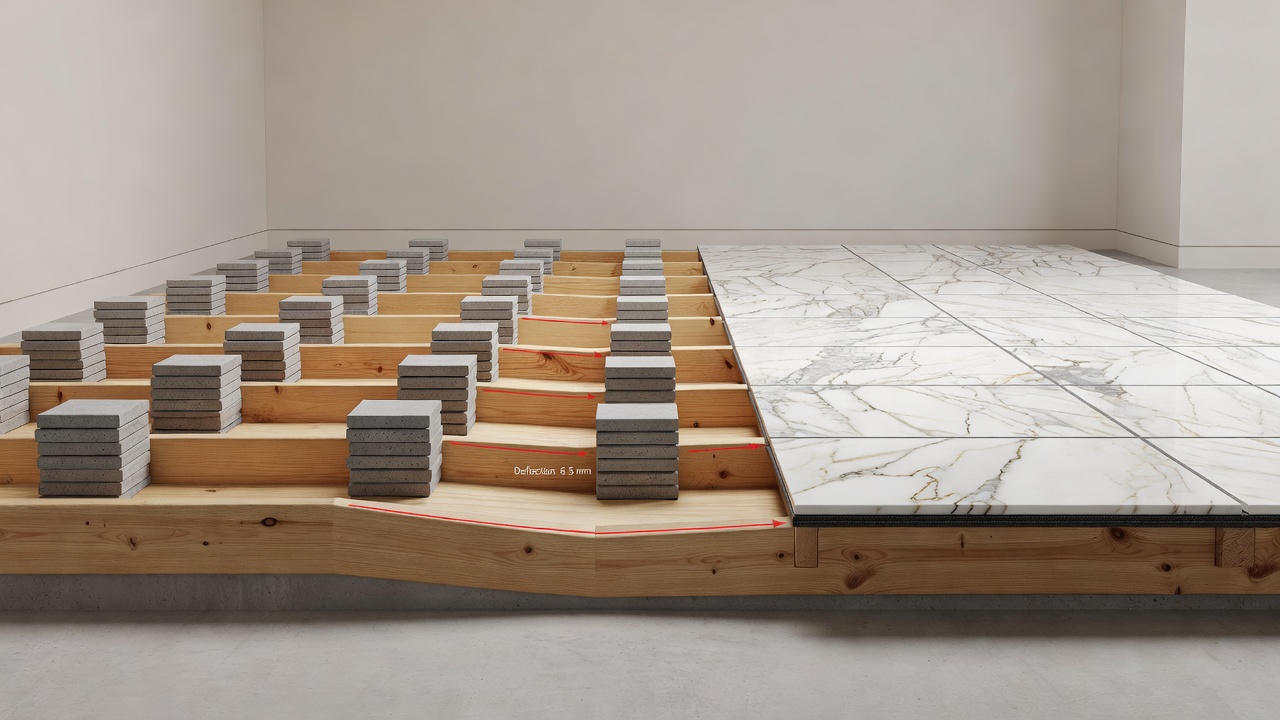
Marble composites combine natural stone particles with polymer resins to create flooring panels that deliver higher density and different stiffness characteristics than traditional hardwood or tile alone, and these properties directly influence how floor joists respond when loads remain in place for extended periods. Residential structures experience constant dead loads from the flooring itself plus live loads from furniture, occupants, and equipment, which means the interaction between the composite layer and the supporting joists determines the rate and pattern of downward movement over months or years.
Material Characteristics That Drive Structural Behavior
Engineers measure modulus of elasticity and creep resistance when evaluating marble composites because the polymer matrix allows slight viscoelastic deformation under sustained stress while the stone aggregate resists compression. Data from material testing laboratories show that these composites often exhibit lower creep rates than solid marble yet higher than engineered wood products, which creates a hybrid response when bonded or fastened to joist systems. Observers note that the added mass from the stone content increases the initial dead load on each joist, shifting the neutral axis slightly and altering bending stress distribution along the span.
Deflection Pattern Modifications in Residential Settings
Standard wood joists follow predictable parabolic deflection curves under uniform loading, but the rigid surface layer of marble composites distributes point loads across multiple joists more effectively than flexible finishes. This redistribution reduces localized peaks in individual members while increasing the overall system stiffness in the short term, although sustained loads introduce gradual changes as the composite experiences micro-settling at contact points. Research indicates that edge and corner joists experience different deflection gradients compared with interior members because the composite panels transfer shear forces laterally, and this effect becomes measurable after several weeks of continuous loading.
Long-Term Load Duration Factors
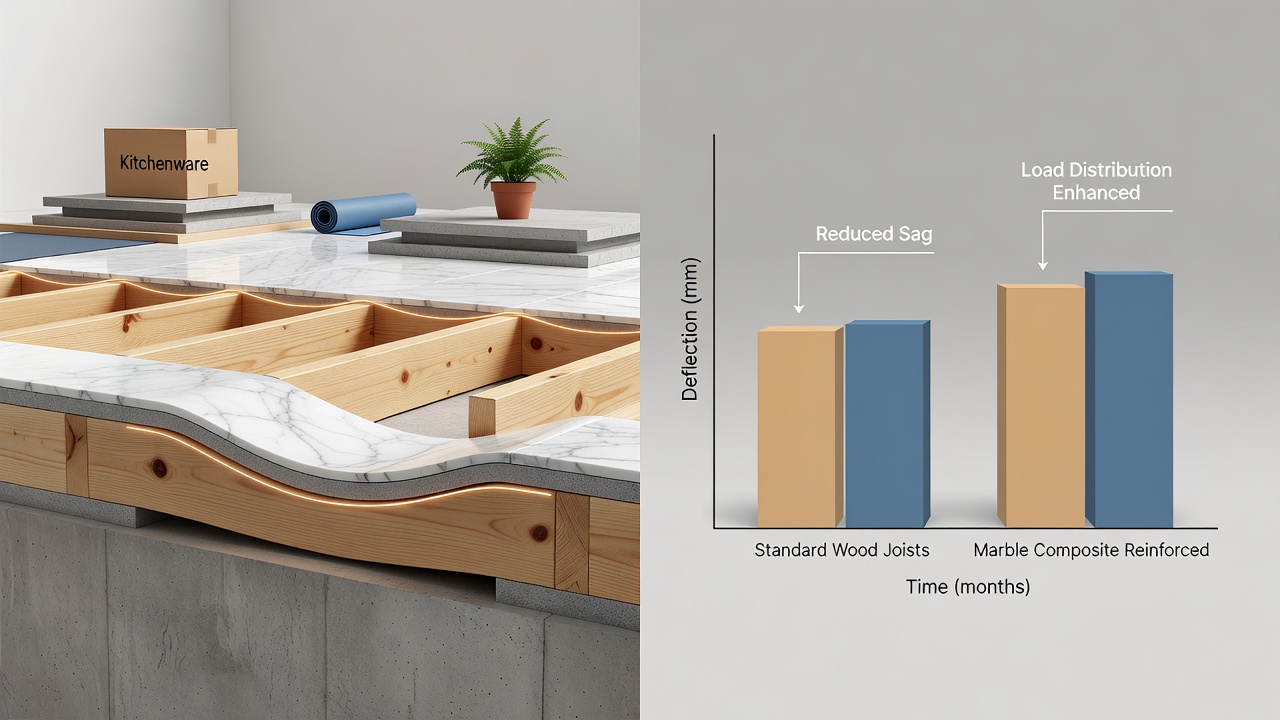
Building codes specify deflection limits based on span-to-depth ratios, yet marble composites introduce time-dependent variables that standard tables do not fully capture. Sustained residential loads, such as those from kitchen islands or large bookcases, produce cumulative strain in both the joist lumber and the composite layer, and the interface between them can develop differential movement if fasteners allow minor slip. Figures from long-term monitoring programs reveal that deflection continues to increase at a decreasing rate for up to eighteen months before stabilizing, provided moisture conditions remain constant and the subfloor connection stays intact.
Measurement Techniques and Field Data Collection
Researchers employ laser displacement sensors and strain gauges attached to joist undersides to capture incremental changes, while periodic leveling surveys confirm the overall floor profile. One study conducted across multiple test homes documented that rooms with marble composite flooring showed 12 to 18 percent less mid-span deflection after one year compared with identical joist layouts finished with carpet and pad, although total system weight had increased. These measurements also highlighted that vibration damping improved because the denser surface layer absorbs impact energy before it reaches the framing.
Code Considerations and Upcoming Standards Updates
Current residential building codes treat composite flooring as an added dead load without separate deflection allowances, yet industry groups continue to collect performance data ahead of revisions scheduled for October 2026. Engineers reference test protocols from organizations such as ASTM International when modeling composite effects, and similar guidance appears in Canadian construction research from the National Research Council. Those preparing structural calculations for new homes increasingly run finite element models that incorporate both the instantaneous and time-dependent properties of marble composites to verify compliance with span tables.
Regional Variations in Application
Climate influences the interaction because temperature swings affect the polymer component of the composite while humidity changes alter joist moisture content and stiffness. In drier regions, the composite maintains more consistent contact pressure, whereas higher humidity areas see slight expansion that can modify load paths at the joist interface. Data collected from installations in varied climates help refine predictive models used by structural engineers across different jurisdictions.
Conclusion
Marble composites modify joist deflection patterns by increasing system mass, redistributing loads laterally, and introducing viscoelastic behavior under sustained residential floor loads, with measurable effects that continue over the first year of service. Monitoring programs and material testing supply the quantitative basis for updating design practices, and the standards revisions expected in October 2026 will likely reflect these accumulated findings. Structural calculations that account for these interactions help maintain floor performance within established limits across diverse residential applications.